Categories
Waterfront & Specialty PropertiesPublished August 17, 2026
Waterfront Living in Western Washington | A Buyer’s Guide

What Buyers Should Understand Before Choosing a Property
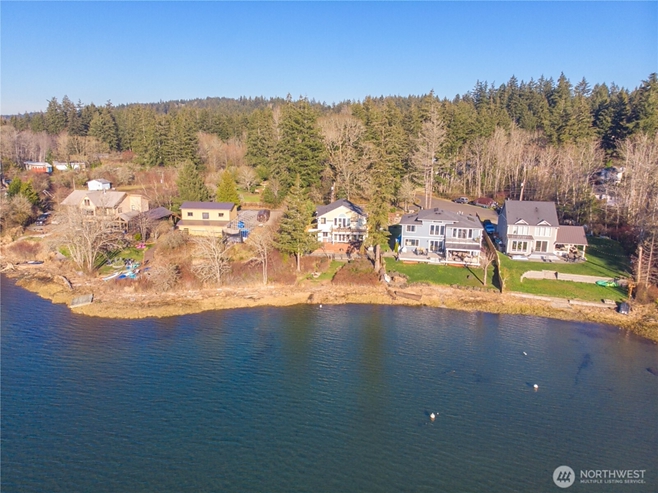
Waterfront living in Western Washington can mean waking up on Hood Canal with a kayak steps from the house. It can mean watching boats cross Puget Sound from a high-bank property in Gig Harbor. It can also mean living several homes back from the shoreline with deeded access to a private community beach.
All three properties might appear in a buyer's search for "waterfront."
They offer very different experiences.
That's one reason Heather Redal encourages buyers interested in waterfront real estate to begin with a conversation about how they want to use the water. The answer can narrow the search far more effectively than simply deciding how many bedrooms, how much square footage, or even which community you prefer.
Western Washington has an extraordinary variety of waterfront property. Understanding what comes with a particular home requires looking beyond the view.
Start With the Life You Picture on the Water
A recent Redal Homes listing with waterfront access in Belfair is a good example of what can attract buyers to this part of Western Washington. Hood Canal offers a completely different setting from an urban waterfront, a lakefront home, or a property overlooking Puget Sound.
For some buyers, the appeal is active: kayaking, paddleboarding, boating, fishing or walking the shoreline. Others care most about privacy, wildlife, views and the quieter rhythm that comes with living near the water.
Those priorities matter when evaluating property.
Someone who wants to launch a kayak regularly may value easy, low-bank access much more than a dramatic elevated view. A boater needs to think about depth, tides, moorage and where a boat can actually be launched or kept. A buyer primarily interested in scenery may find that a high-bank or water-view home delivers exactly what they want without some of the considerations that come with owning shoreline.
Before Heather starts narrowing waterfront properties for a client, understanding that lifestyle is part of understanding the search.
"Waterfront" Doesn't Always Mean the Same Thing
Real estate descriptions use several terms that sound similar but can represent very different ownership and access.
A home may have direct waterfront. Another may have shared community waterfront. A property can have deeded beach access without owning the land along the water. Some homes offer spectacular water views with no private water access at all.
Then there are questions about docks, moorage and tidelands.
Washington's aquatic-land ownership is unusually complex. The Washington Department of Natural Resources manages millions of acres of state-owned aquatic lands, while some tidelands and shorelands are privately owned. Historic transfers of tidelands into private ownership add another layer to what buyers may encounter in Western Washington.
The practical lesson is straightforward: don't assume the rights associated with a waterfront property from what you can see during a showing.
If beach access, tideland ownership, a dock, shared waterfront or moorage is important to the purchase, those rights should be verified through the appropriate title documents, recorded easements, plats and other property records during due diligence.
Low Bank, High Bank and Everything Between
The physical shoreline deserves as much attention as the house.
A low-bank property can offer convenient access to the water, which is highly desirable for buyers who want recreation to be part of daily life.
An elevated or high-bank home may offer sweeping views, greater privacy and a very different relationship with the shoreline. Access may be limited or nonexistent, and slope conditions become part of the property's long-term considerations.
Protected bays and inlets differ from more exposed shoreline. Hood Canal differs from the open waters of Puget Sound. Freshwater lakefront brings another set of characteristics.
Even within the same community, two waterfront homes can experience the water differently.
For a buyer, the important question isn't simply, "Is this waterfront?"
It's, "What does owning this particular waterfront allow me to do?"
Look at the Land as Carefully as the House
It's easy for the view to command all of your attention during a waterfront showing.
Heather encourages buyers to look in the other direction, too.
What's happening between the house and the water? Is there a bluff or steep slope? How does drainage move across the property? Is there an existing bulkhead? Where is the ordinary high-water mark? Are there wetlands or other critical areas nearby?
These details can influence maintenance and what may be possible in the future.
Washington regulates development along qualifying shorelines through the Shoreline Management Act and locally adopted Shoreline Master Programs. In Pierce County, for example, shoreline development is subject to county shoreline review, and regulated activities can include construction, bulkheads, pilings, dredging, filling and other alterations.
The exact rules depend on the property and jurisdiction, which is why assumptions based on what a neighboring homeowner has done can be misleading.
If You Want to Change the Property, Investigate Before You Buy
This is one of the most important conversations to have during a waterfront purchase.
Imagine finding an older home in a location you love. You can already picture expanding the deck, improving access to the beach, rebuilding an aging bulkhead or adding a dock.
Whether those plans are feasible may affect how much the property is worth to you.
Shoreline properties can be subject to state and local rules that affect development and alterations. Pierce County, for example, states that all shoreline development within unincorporated county shoreline jurisdiction requires shoreline review.
That doesn't mean waterfront property can't be improved. It means a buyer who considers a future improvement essential should investigate its feasibility while evaluating the purchase.
A beautiful property can still be the wrong property if the feature you intend to create isn't allowed or isn't practical.
Docks, Bulkheads and Shoreline Work Deserve Their Own Due Diligence
Existing waterfront structures can be valuable amenities, but their presence doesn't necessarily answer every question about them.
Buyers may want to understand when a dock or bulkhead was built, whether permits or approvals exist, its current condition, and what could be required when it eventually needs repair or replacement.
Local shoreline rules can be detailed. Pierce County's regulations, for example, specifically address activities such as bulkheading and driving pilings, and its Shoreline Master Program governs development along county shorelines.
For a buyer who considers a dock, beach access or shoreline structure central to the property's appeal, these aren't details to save for after closing.
Septic Can Be Part of Waterfront Ownership
Many waterfront homes outside more densely developed areas of Western Washington use onsite septic systems.
That makes the septic system part of the real estate decision.
Buyers should understand the system's age, maintenance history and condition, along with where the system and drainfield are located on the property. The Washington State Department of Health notes that property owners are responsible for maintaining their onsite sewage systems and that properly functioning systems help protect both public health and water quality.
Location becomes particularly important if you're thinking about remodeling or expanding the home later.
A larger house on paper isn't especially useful if the property's infrastructure or regulations can't support what you hope to build.
Insurance and Risk Are Property-Specific
Living next to water naturally raises questions about flood insurance.
Proximity to water alone doesn't provide the answer.
Elevation, flood-zone designation, shoreline characteristics and the specific property all matter. A low-lying waterfront home can present very different considerations from a residence sitting well above the water on a bluff.
For high-bank properties, buyers may also need to understand slope stability, erosion and drainage.
This is another area where Heather recommends getting property-specific information rather than making assumptions based on the home's waterfront label.
Insurance should be investigated early enough in the purchase process to understand both coverage availability and cost before those expenses become a surprise.
Waterfront Ownership Comes With Maintenance That Inland Buyers May Not Expect
Western Washington's water is part of what makes these properties special. It also creates a demanding environment for a home.
Salt air, moisture, wind and exposure can affect exterior materials, decks, railings, windows, roofing and metal components differently depending on the property's location.
A wooded waterfront property may bring another maintenance layer: drainage, tree management, moss and vegetation.
None of those considerations makes waterfront ownership undesirable. They belong in the financial picture alongside the mortgage, taxes and insurance.
A buyer who understands the property before purchasing it can budget for the lifestyle much more realistically.
Western Washington Gives Waterfront Buyers More Choices Than They May Realize
One of the advantages of searching here is the diversity.
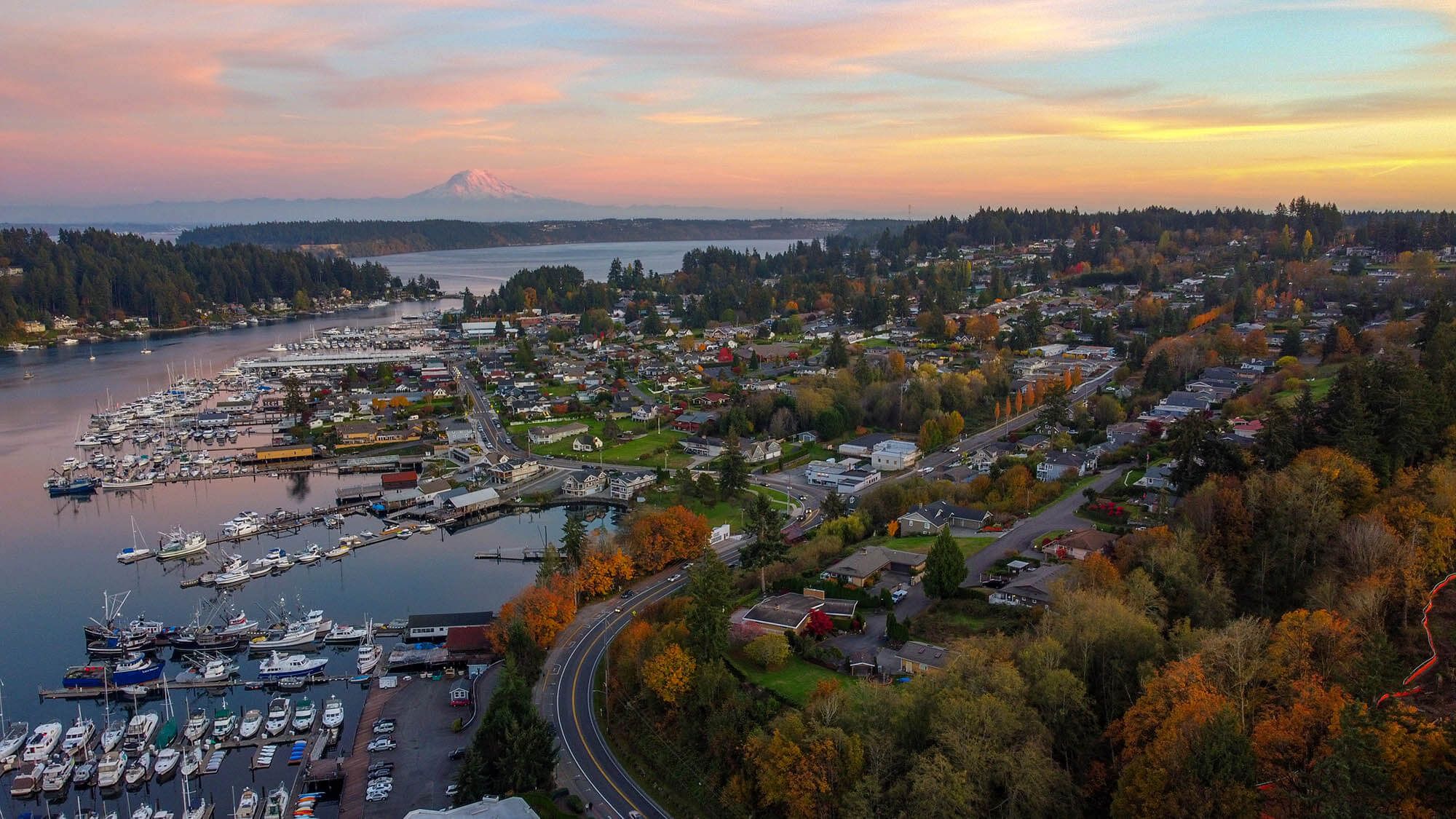
Gig Harbor and the surrounding Pierce County shoreline offer access to Puget Sound and a strong connection to boating and maritime life. Hood Canal communities such as Belfair offer a different pace and landscape. Kitsap Peninsula communities bring buyers close to extensive saltwater shoreline, while lakes throughout the region provide another version of waterfront living entirely.
There are also properties where shared waterfront access gives buyers much of the lifestyle they want without purchasing direct shoreline.
That can open the search considerably.
Heather's role is often to help buyers identify which of those tradeoffs actually matter to them. Someone who begins convinced they need direct waterfront may discover that a home with a spectacular view and excellent community beach access fits their lifestyle better. Another buyer may decide that walking directly from their property to the water is the one feature they aren't willing to compromise.
There isn't one version of waterfront living that is inherently better. There is a version that fits the way you want to live.
A Waterfront Search Should Be More Specific Than "Waterfront"
The best waterfront searches become more focused as the buyer learns what matters.
Do you want saltwater or freshwater?
Do you need direct access?
Will you keep a boat?
Is kayaking or paddleboarding part of your daily life?
Would you trade direct access for a better view?
Are you comfortable maintaining shoreline structures?
Do you plan to remodel or expand?
Is the property a full-time residence, second home or long-term investment?
Those questions change which properties deserve your attention.
They also help prevent the view from overshadowing details that may matter considerably after you've owned the home for several years.
Buying Waterfront Real Estate With Redal Homes
Heather Redal and the Redal Homes team help buyers throughout Gig Harbor, Pierce County and surrounding Western Washington communities evaluate homes with the larger property in mind.
With waterfront real estate, that means understanding the house, the land, the access and the lifestyle together.
The best waterfront property isn't necessarily the one with the most dramatic view or the most feet of shoreline. It's the one whose location, access, ownership rights, infrastructure and long-term considerations support the life you actually want to live there.
If waterfront living is part of your next move, contact Heather Redal and Redal Homes to begin defining what the right waterfront property looks like for you.

Heather Redal
| Heather Redal | Best Choice Realty
or another way